Adventure tourism is one of the fastest-growing segments in the entire hospitality industry. If you are a hospitality professional looking for something different, or a student deciding which area to specialise in, this is a sector worth paying serious attention to right now.
Adventure tourism is not a new idea, but it has never grown this fast. The global market was valued at around $415 billion in 2024 and is projected to grow at over 16% per year through 2034. That kind of growth creates a lot of jobs. And many of those jobs are perfectly suited to hospitality professionals who want to do something more than check-in desks and banquet setups. This post covers 7 types of adventure tourism and the career opportunities each one opens up.
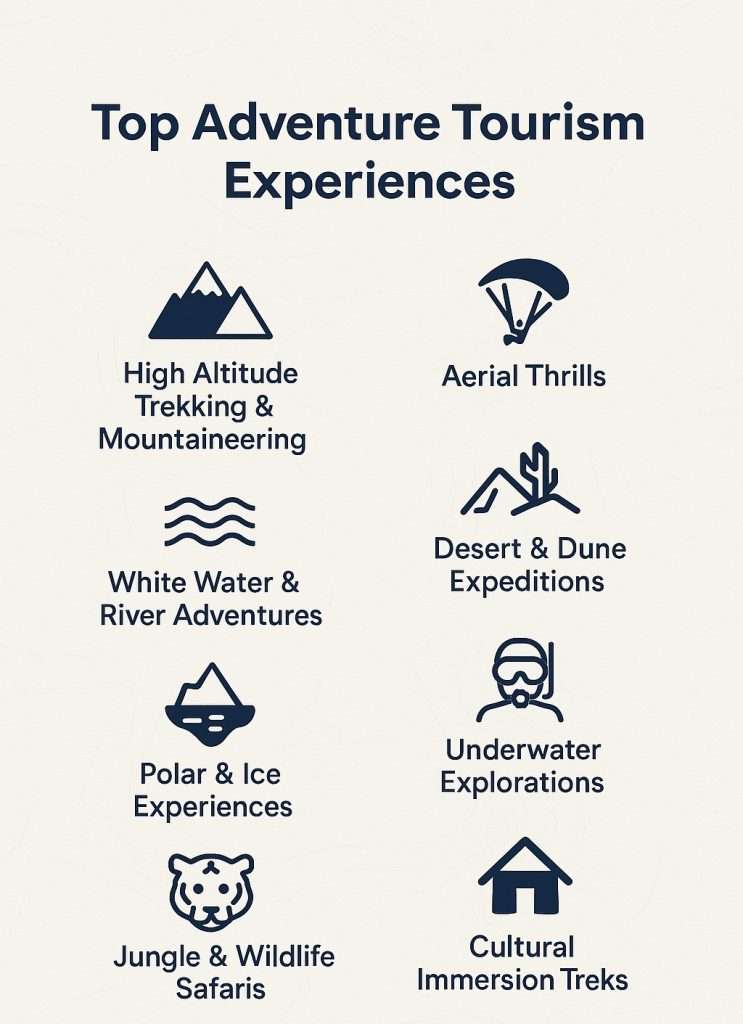
Adventure tourism is a growing part of the hospitality industry. It refers to any type of travel that requires you to participate in physically engaging, culturally immersive or nature-based experiences that take you out of your comfort zone.
Adventure tourism is broadly divided into two categories. It helps to understand both before we look at the types.
Soft adventure is the bigger market — it accounted for around 64% of the global adventure tourism market in 2024 according to multiple research reports. That is important for career purposes because it means the jobs in adventure tourism are not all extreme sports instructors. A lot of them are hospitality, guiding, coordination, and operations roles that someone with a hotel background can step into.
Here are 7 major types of adventure tourism, with the career angle on each one.
Hot Air Ballooning
Hot air ballooning is one of the best ways to get a true bird’s eye view of a destination. The views you get from above are unlike anything else, and they stay with you long after the trip is over. Balloon rides are popular across the world — Cappadocia in Turkey, the Serengeti in Tanzania, Jaisalmer in India, and the Napa Valley in the USA are among the most sought-after destinations.
This type of adventure appeals to a wide audience, including couples, families, and senior travellers. It is a soft adventure that delivers a premium experience. Not for those with height issues, of course. But the range of travellers it attracts makes it very commercially viable.
Zip Lining
Zip lining is one of the most accessible adventure activities in the world. It is available almost everywhere and attracts a wide age range of participants. It gives you a thrill without going too overboard, which is exactly why it is so popular with travellers who want adventure without extreme risk.
For those who have not tried it yet, here is a quick look at what to expect:
Fast, furious, and genuinely fun. Most resorts that have zip lines across forests or hills include it as part of a wider adventure package.
Free Falling, Skydiving and Bungee Jumping
A lot of resorts include some version of free falling or high-altitude activities in their adventure packages. When most people picture this, skydiving or bungee jumping come to mind first. Free falling as a resort activity is designed to give you a similar feeling with less risk involved. So if bungee jumping or skydiving feels like too much, free falling is worth trying.
Skydiving is growing rapidly as a standalone tourism activity. Dubai, New Zealand, Bir Billing in Himachal Pradesh, and Deesa in Gujarat are among the most popular drop zones in Asia. It is hard adventure, clearly. But the operations behind it are very much a hospitality business.
River Rafting and Water Adventures
Rafting is one of the most common and most popular types of adventure tourism in the world. It works as both a soft adventure and a hard one depending on where you do it. Battle big rapids in Rishikesh or the Zanskar for the hard adventure experience. Choose calmer stretches later in the season when water levels drop for something more suitable for families or first-timers.
India has some outstanding rafting destinations. Rishikesh is probably the most well-known, but Coorg, Ladakh, and parts of the Northeast are all growing fast as adventure tourism destinations. Globally, the Zambezi in Africa, the Futaleufú in Chile, and the Colorado River in the USA are bucket-list runs.
| Destination | Grade | Best Season | Career Opportunities Nearby |
|---|---|---|---|
| Rishikesh, India | II to IV | October to June | Rafting camps, river lodges, guide training |
| Zanskar, Ladakh | IV to V | July to September | Expedition operations, wilderness camps |
| Coorg, Karnataka | I to III | July to October | Eco-resorts, weekend camp operators |
| Teesta, Sikkim | II to IV | October to May | Adventure lodges, tourism departments |
Spelunking (Caving)
Spelunking simply means exploring caves for adventure. You climb, squeeze, and crawl through caves and tight passages. Some caves also offer zip lining between levels or underwater exploration where formations allow it. It is becoming increasingly popular as an adventure tourism activity.
India has some remarkable cave tourism destinations. The Borra Caves in Andhra Pradesh, Belum Caves in Karnataka, and the Mawsmai Caves in Meghalaya all attract large numbers of visitors. Internationally, Vietnam’s Son Doong — the world’s largest cave — and New Zealand’s Waitomo glowworm caves are famous examples of the premium end of this segment.
BASE Jumping
BASE jumping is about as hard as adventure tourism gets. The name stands for the four platforms jumpers leap from: Buildings, Antennas, Spans (bridges), and the Earth (cliffs). It can involve jumping from a speeding aircraft at 15,000 feet and free falling at over 100 mph before deploying a parachute.
Adventurous? Absolutely. Interesting as a career segment? Yes, but in a specific way. BASE jumping tourism is a small, highly specialised niche. The operators who run it are very safety-focused, highly certified, and usually located in specific jump destinations like Lauterbrunnen in Switzerland, Kjerag in Norway, and Moab in the USA.
Jungle Tourism and Mountaineering
Jungle tourism lets you explore areas that most travellers never see. Tracking tigers in Ranthambore, gorilla trekking in Uganda or Rwanda, night safaris in Corbett, or deep jungle walks in Coorg or the Andamans — these bring out a side of travel that no city break can replicate. Jungle tourism often comes with mountaineering as a companion activity, especially in destinations like Ladakh, Himachal Pradesh, and the Northeast.
Mountaineering itself can be soft or hard depending on your skill level and the mountain. Something as manageable as a rock climbing day activity, or as demanding as a Himalayan glacier expedition. This is probably the oldest and most consistently popular form of adventure tourism in India and it keeps growing every year.
Paragliding, scuba diving, and bungee jumping also deserve a mention here as very popular adventure activities that we will keep adding to future updates of this article.
Looking for a Career in Adventure Tourism or Hospitality? Start Here.
Adventure Tourism Is a Real Career Path, Not Just a Travel Category
So there you go. 7 types of adventure tourism, and a career angle on every one of them. A lot of popular travel websites make it a point to promote adventure tourism packages, which tells you how mainstream this has become. It is not a niche anymore. It is a serious, fast-growing part of the hospitality industry.
If you have missed an adventure type that you think deserves to be on this list, leave a comment and let us know. We will keep updating this as the segment grows. Parasailing, bungee jumping, scuba diving, paragliding — all of these have strong career ecosystems around them too and will feature in future updates.
For hospitality professionals, the key takeaway is simple. Adventure tourism creates real jobs. Many of them are not extreme sports roles. They are operations, guiding, guest experience, and accommodation roles that someone with a strong hospitality background can step into, often with some additional certification. If you want to understand how to build a hospitality career that gives you this kind of flexibility, the career preparation guide in the related bar above is a good place to start.


